One of the most common questions homeowners ask is, "What happens to the electricity my solar panels don't use?"
The answer depends on whether your home has a battery storage system.
Understanding where your excess solar energy goes can help you make the most of your system and better understand your electricity bill. If you've ever wondered what happens to excess solar energy, this short solar energy explained guide offers a simple solar system explained for grid connected solar homes in Australia, including South East Queensland.
With South East Queensland receiving excellent sunshine throughout much of the year, many homeowners regularly generate more solar energy than they use during the middle of the day.
Summary
Your home uses solar power first. Any surplus is either exported to the grid for a feed in tariff credit or stored in a home battery for later use.
With a battery, excess energy will generally charge the battery before any remaining surplus is exported to the grid, helping reduce evening grid consumption and improve savings.
How much you export or store depends on your daytime electricity usage, system size and weather conditions.
To maximise self consumption, run major appliances during daylight hours and consider battery storage.
Your Home Uses Solar Energy First
When your solar panels are generating electricity, your home will always use that energy first. In simple terms, this is how solar panels work in a grid connected solar setup. Your solar power generation supplies your appliances before any electricity is drawn from the grid.
This means appliances such as your refrigerator, air conditioner, lights, television and other household devices are powered by your solar system using solar electricity before electricity is drawn from the grid.
If your home is using all the electricity your solar panels are producing, nothing is exported.
What Happens When Your Solar Panels Produce More Than You Need?
During the middle of the day, your solar system may produce more electricity than your home is using.
This is known as excess solar energy. Many homeowners ask where does excess solar power go or what happens to extra solar power. The answer depends on whether your home has battery storage.
Without a Battery
If your home does not have a battery, any unused solar energy is automatically exported to the electricity grid.
Most electricity retailers in Queensland offer a feed in tariff for excess electricity exported to the grid, although rates vary between retailers and electricity plans.
Later in the evening, when your solar panels are no longer generating electricity, your home will draw power from the grid as normal.
With a Battery
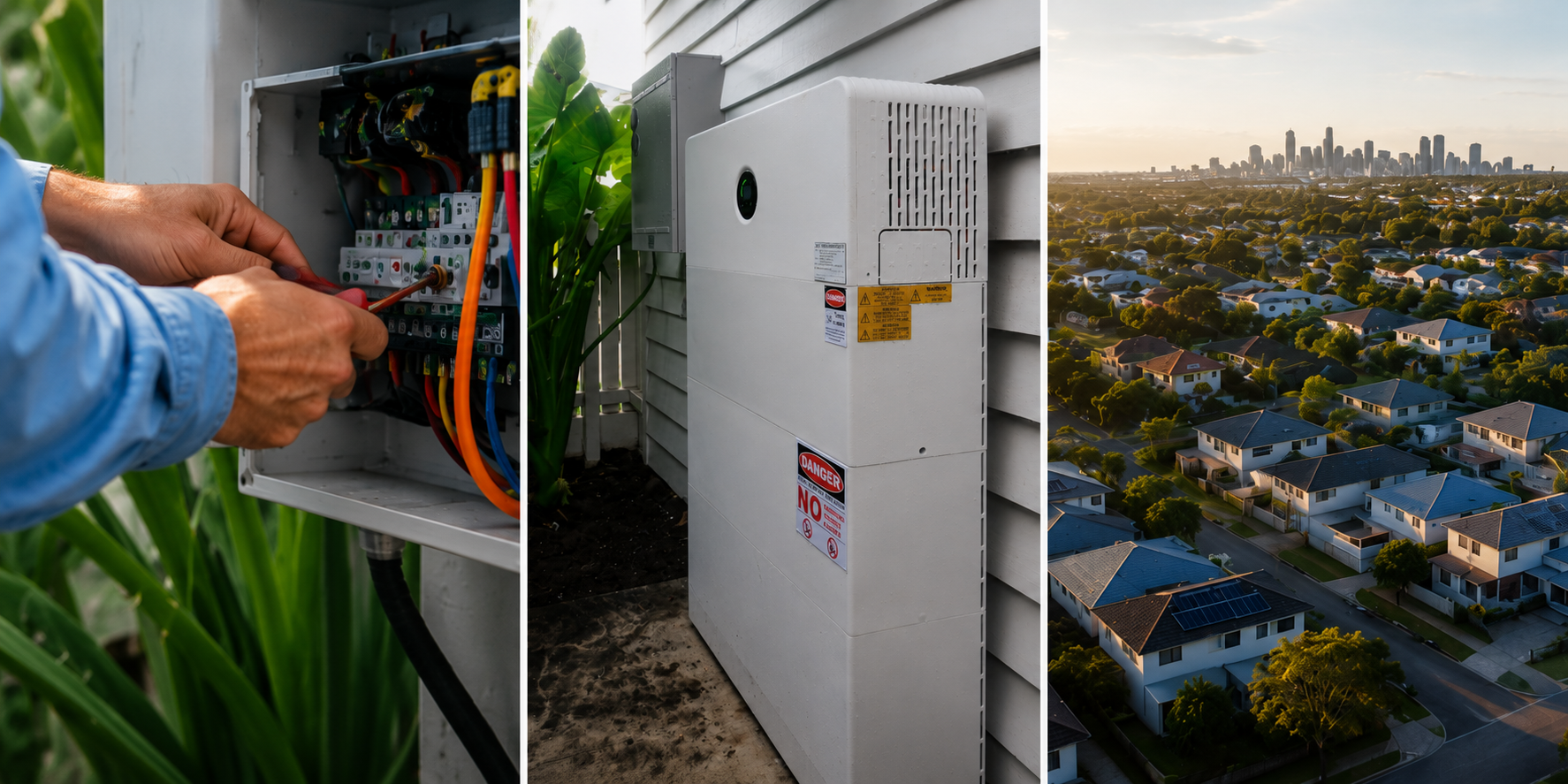
If your home has a battery storage system, excess solar energy will generally be used to charge the battery before any remaining electricity is exported to the grid.
Instead of sending unused electricity away, your battery stores it for later use. This type of solar energy storage is popular with solar panels and battery systems because it can increase the value of a home solar system.
When the sun goes down or your household electricity demand increases, your home can use the stored energy from the battery instead of purchasing electricity from the grid.
This can help reduce grid electricity consumption and improve the overall value of your solar system.
Depending on the battery system you choose, it may also provide backup power during a blackout when installed with the appropriate backup equipment.
Does Every Home Export Solar Energy?
Not always.
Homes that use a large amount of electricity during the day may consume most or all of the energy their solar panels generate.
Other homes may regularly produce more electricity than they need, particularly during sunny weather or when occupants are away during the day.
Every household is different, which is why a solar system should be designed around your individual energy usage and lifestyle.
A professional system design is important because every home has different energy requirements, roof layouts and future electricity needs. Installing the largest system is not always the best solution.
Can You Use More of Your Own Solar Energy?
Yes.
Simple changes can help increase the amount of solar energy your household uses directly. These include running appliances such as washing machines, dishwashers, pool pumps or charging an electric vehicle during daylight hours when your solar panels are producing the most electricity.
For homeowners looking to maximise self consumption, battery storage can also allow excess solar energy generated during the day to be used after sunset.
Making the Most of Your Solar Investment
Understanding where your excess solar energy goes is an important part of getting the most from your solar system. These principles apply broadly to solar energy across South East Queensland and most residential solar systems.
Whether your unused electricity is exported to the grid or stored in a battery, a well designed system can help reduce reliance on grid electricity and improve your long term energy savings.
At Open Electrical, we design tailored solar and battery systems for homes and businesses across South East Queensland. Every system is designed around your energy usage, property and future goals to help maximise self consumption, reduce reliance on the grid and get the most value from every kilowatt of solar energy generated.
Whether you are considering solar panels, battery storage or both, our experienced team is here to help you find the right solution for your home or business.
Frequently Asked Questions
What happens to excess solar energy if I do not have a battery?
Any solar electricity your home does not use is automatically exported to the electricity grid. Most electricity retailers in Queensland offer a feed in tariff for exported electricity, although rates vary between retailers. When the sun goes down, your home will draw power from the grid as normal.
What changes if I add a home battery?
With a battery, excess solar energy will generally charge the battery before any remaining electricity is exported to the grid. After sunset or when your electricity demand increases, your home can use the stored energy instead of purchasing electricity from the grid. Depending on the battery system installed, it may also provide backup power during a blackout.
Do all homes export solar energy?
Not always. Homes with higher daytime electricity usage may consume most or all of their solar generation and export very little. Others, particularly during sunny weather or when nobody is home, may regularly produce more electricity than they use and export the surplus to the grid.
What determines how much I export or store?
The amount of solar energy you export or store depends on your household's daytime electricity usage, the size of your solar system, weather conditions and whether battery storage is installed.
How can I use more of my own solar energy and increase my savings?
Running major appliances such as washing machines, dishwashers, pool pumps and charging an electric vehicle during daylight hours can help increase self consumption. Adding battery storage also allows excess daytime solar energy to be stored and used after sunset, helping you get even more value from your solar system.